Oblivious of the world around her, little "Zizi" as I fondly called her during the short time we spent in her community, had a tiny fist contest with her mother over a plastic bottle of sweet drink that was handed to her as soon as we arrived at the Local Government Chairman's Office in Mallam Maduri, Jigawa State, Nigeria
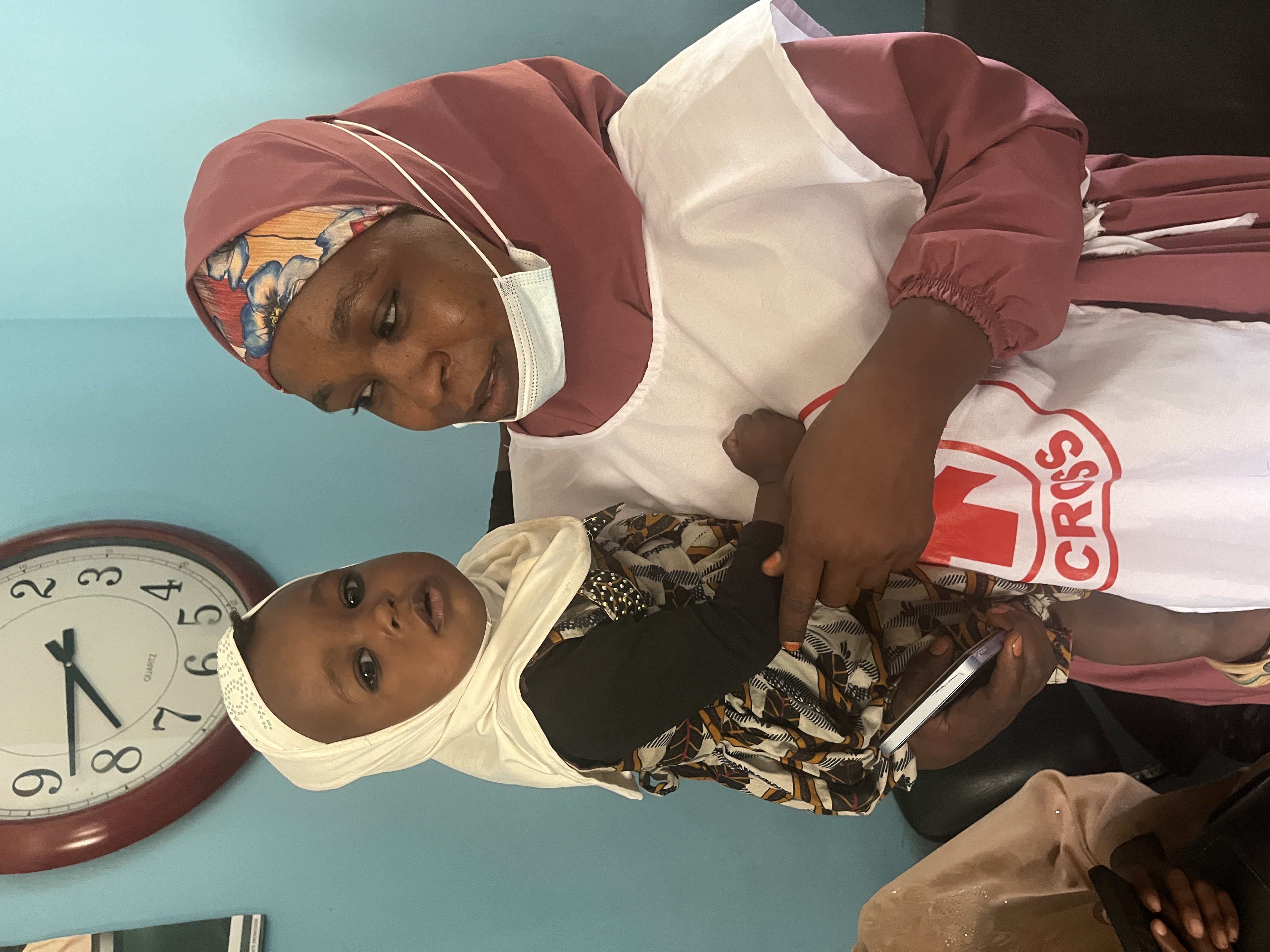
Baby Zainab (Zizi) and her mother
The one-year-old was however a little calm as we boarded a vehicle to Karaye, her community, where she nursed the almost empty bottle. She even rocked it, beckoning on her mother to tie the lifeless bottle with a wrapper on her back.
The way Zizi rocked her bottle which had now become her baby has a remarkable similarity to the way the farmers of Maigatari Local Government Area's Karaye hamlet tilled the rough hard land in anticipation of rain, hoping it would provide food, just as young Zizi hoped her baby was alive.
The only plants we saw on these hectares of land upon our arrival were the Hibiscus Sabdariffa popularly called ‘Zobo’ leaf in Nigeria which looked more or less like sticks. At nightfall, they could be mistaken for tiny, haunting dwarfs.
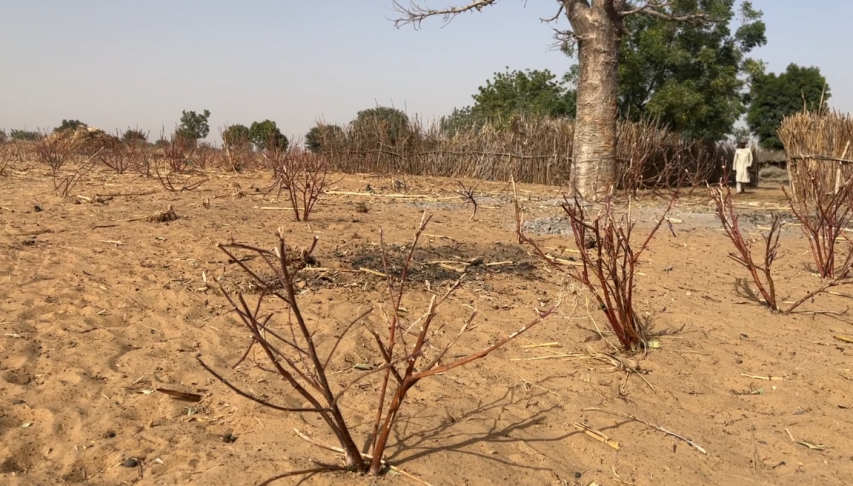
A farm of Hibiscus Sabdariffa popularly called Zobo leaf.
Zobo leaves are for making local drinks not food, this means hunger scents in the air for the majority of the families whose food storage has run out or are too broke to buy.
Jigawa, which is predominantly Muslim is one of the states in Nigeria’s North West where the effects of climate change are evident, but like baby Zizi's bottle baby which contains a little liquid, some of the farmers have switched to irrigation farming in some areas where they have streams, while others who have little or no means of surviving the drought caused by the effects of climate change like Karaye community awaits the rain whenever it comes.
The dry season is usually the hardest as stated by folks in the community, even though their rainy season is no different from a dry spell. Rainfall is a rare commodity here.
The sun was harsh on our skin and the sandy, dry wind powdered our faces, becoming the MUA (make-up artist) we hadn’t realized we needed. The kids who approached the Red Cross team had flaky skin as though they had not known water for a while. Don't even talk about the flies. They seemed to be in charge of security in the community as they hummed everywhere.
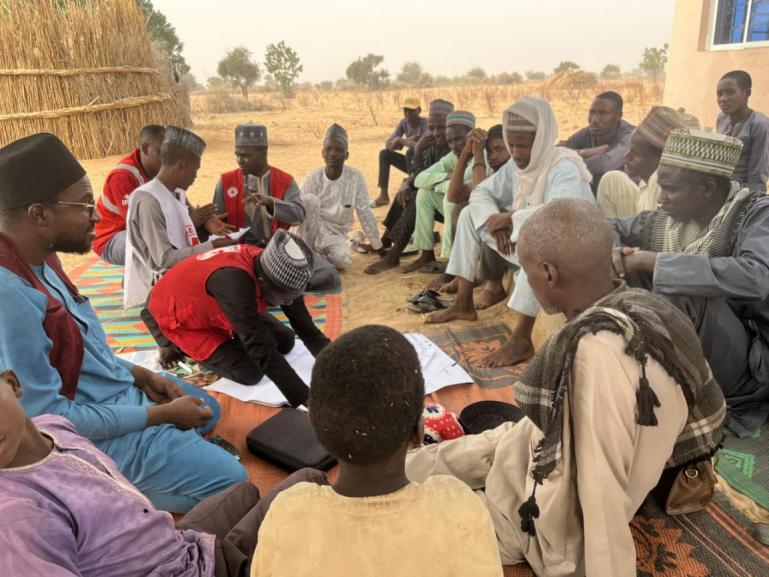
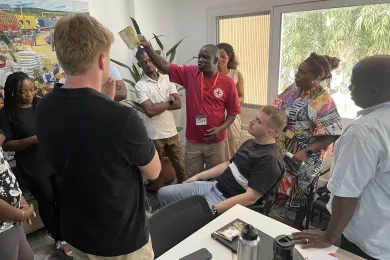
NRCS volunteers conducting EVCA with community members in Mallam Madori LGA.
The experience was no different when we got to Mallam Madori Local Government Area to also conduct the Enhanced Vulnerability and Capacity Assessment, EVCA via community engagement. Our task was to estimate the strengths and weakness of the community in combating climate change taking into cognizance their seasonal calendar, history, coping mechanisms, etc. We discovered that their seasonal calendar has changed drastically over the years with the occurrence of less rainfall, increased heat, drier and dustier wind as well as poor farm produce to none. They revealed that there was a year when all they could plant, and harvest was the Zobo plant.
Unlike the people, the trees that grow here could survive these harsh conditions even though the Baobab tree resembled an old angry shrieking hag as a result of lack of water.
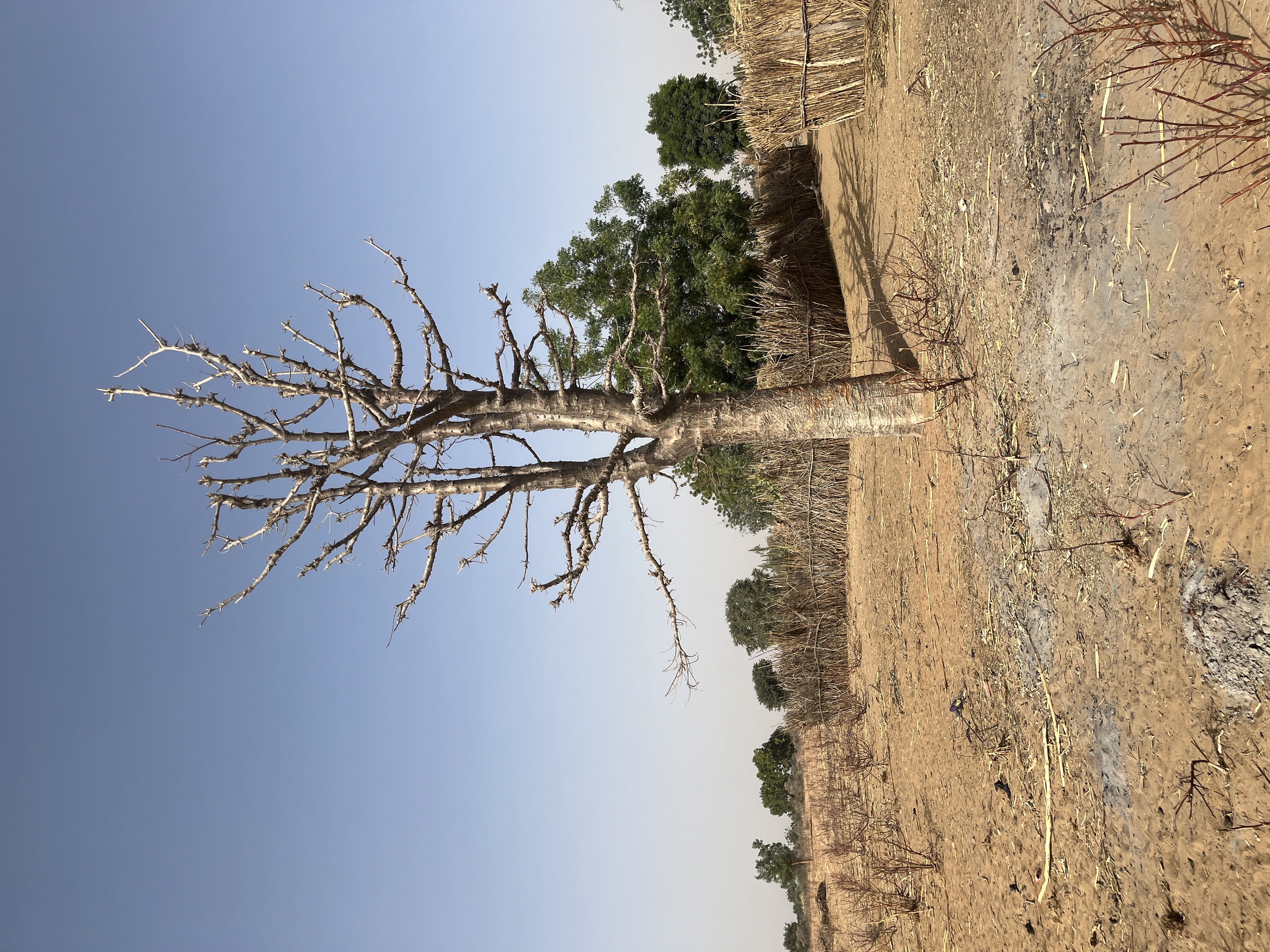
A baobab tree in Mallam Madori LGA.
The community members attested that most of their people have migrated either to greener pastures, or their well-to-do relatives or friends. The ones here are those that do not have anywhere to go.
We also went to Gamji and Makama communities in Kaugama and Sule Tankarkar Local Government Areas. The stories are the same. Drought is a phenomenon these people live with, and it is getting worse by the day given the effects of climate change.
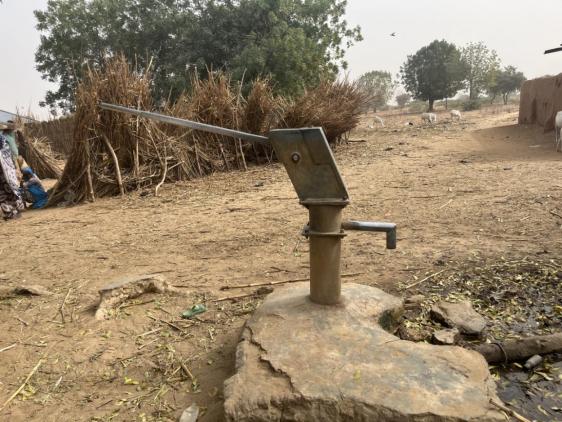
A borehole in one of the communities.
Even though these communities have boreholes and wells, these usually dry up once in every while, leaving them at the mercy of their little or no water storage awaiting the almighty rain. After all, a local saying goes: ‘nah who see food chop, dey drink plenty water or think of bathing.’
Their washing routine is a one-off thing, sometimes they don't rinse their clothes.
One striking thing about these communities we visited in February 2024 is the almost non-existence of open defecation aside from the dry cow dung everywhere which the women harvest to make fire for cooking. They seemed to use it because it is readily available and cheaper than firewood but unbeknownst to them, they are already treading the line of combating climate change which is a good thing for the Red Cross team who noticed that the majority of the community members including the youths are not literate.
We intend to work with these communities to leverage their strengths, that is, their experiences of being affected by "drought"—and improve on their locally-led solutions to support them adapt to or lessen the effects of climate change in their communities, all the while making sure they have year-round access to food, clean water, and appropriate hygiene practices.